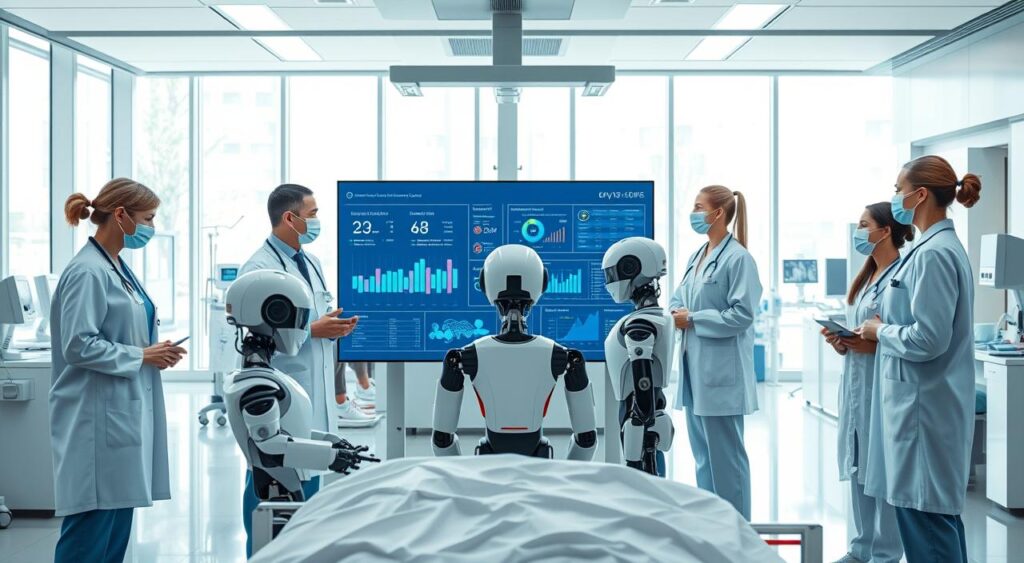
Generative AI is a part of Artificial Intelligence. It makes new things like images, videos, or text. It does this based on what it learned from data.
This tech uses Machine Learning to find patterns in data. It then makes new data that looks like what it learned from.
It uses big neural networks to learn from lots of data. This lets Generative AI make things that look real and different.
Key Takeaways
- Generative AI is a type of Artificial Intelligence that generates new content.
- It uses Machine Learning algorithms to learn from existing data.
- Generative AI can produce images, videos, or text.
- The technology relies on complex neural networks trained on large datasets.
- Generative AI can create highly realistic and diverse outputs.
The Evolution of AI: From Rule-Based Systems to Generative Models
AI has changed a lot since it started. It now helps us in many ways. We use it every day.
Historical Context of AI Development
At first, AI used rule-based systems. These systems followed rules to make choices. But they couldn’t change much.
Then, AI got better with machine learning. This let systems learn from data.
The Paradigm Shift to Generative Capabilities
Generative models changed AI a lot. Now, machines can make things that look like they were made by people.
| AI Stage | Characteristics | Capabilities |
|---|---|---|
| Rule-Based Systems | Operated on predefined rules | Limited decision-making |
| Machine Learning | Learned from data | Improved predictive accuracy |
| Generative Models | Created new content | Advanced content generation |
Defining Generative AI: Creating Something New
Generative AI is a big step in artificial intelligence. It lets machines make new things. This is different from old AI that just looks at data.
Core Concepts and Capabilities
Generative AI uses special algorithms to make new data. It looks like the data it was trained on. This is thanks to neural networks that learn from the data.
This AI can do lots of things. It can make pictures and videos that look real. It can even make music and write stories. This could change many industries by making content creation easier.
Distinguishing Features from Traditional AI
Generative AI is special because it makes new things. Old AI just looks at data. This is because of how they work.
Input-Output Relationship Differences
Old AI looks at data, follows rules, and then gives an answer. Generative AI looks at data, learns, and then makes something new. This new thing wasn’t in the data before.
| Feature | Generative AI | Traditional AI |
|---|---|---|
| Primary Function | Creates new content | Analyzes or processes existing data |
| Output | Original content (images, text, etc.) | Analysis or decision based on input data |
| Learning Mechanism | Learns patterns to generate new data | Follows predefined rules |
The Technical Mechanics Behind Generative AI
Generative AI uses neural networks and special training methods.
Neural Networks as the Foundation
Neural networks are key to Generative AI. They help make complex models that learn from lots of data. These networks are like the human brain, making it possible to create detailed patterns.
Training Methodologies and Data Requirements
The success of Generative AI models depends on how they are trained and the data they use. Training methodologies can be different. Some use labeled data, while others find patterns without labels.
Supervised vs. Unsupervised Learning Approaches
Supervised learning is good for making content that meets specific rules. Unsupervised learning lets models find new patterns and create unique content without labels.
Choosing between supervised and unsupervised learning is important. It affects what the model can do and the kind of content it can make. Knowing this helps make Generative AI work better.
Key Architectures Driving Generative Innovation
Many important architectures are leading the way in generative AI. They help make complex data, changing many fields.
Generative Adversarial Networks (GANs)
GANs have two neural networks that work together. The generator makes data, and the discriminator checks if it’s real. This back-and-forth makes the data better over time.
Transformer Models and Attention Mechanisms
Transformer models changed how we deal with words. They use self-attention mechanisms to understand long texts better. This helps them make sense and create good text.
Diffusion Models: The New Frontier
Diffusion models are new and exciting. They start with noise and make it look like real data. This is a new way to create data.
| Architecture | Key Features | Applications |
|---|---|---|
| GANs | Adversarial training, generator-discriminator | Image generation, data augmentation |
| Transformer Models | Self-attention mechanisms, sequential data handling | NLP tasks, text generation |
| Diffusion Models | Iterative refinement, noise signal processing | Image synthesis, data generation |
Latest I.A. News: 2023’s Groundbreaking Generative Models
2023 was a big year for Generative AI. Many new models came out. They changed what AI can do.
GPT-4 and OpenAI’s Recent Developments
OpenAI’s GPT-4 was a big deal. It got better at understanding and making text. This makes it useful for many things.
Google’s PaLM 2 and Anthropic’s Claude
Google’s PaLM 2 is very good at language. Anthropic’s Claude is safe and works well. Both are important for AI.
Image Generation Breakthroughs: Midjourney v5 and DALL-E 3
Midjourney v5 and DALL-E 3 changed image making. They make images look real and new. This opens up creative and business chances.
| Model | Key Features | Applications |
|---|---|---|
| GPT-4 | Advanced NLP, Text Generation | Content Creation, Chatbots |
| PaLM 2 | Language Understanding, Generation | Translation, Summarization |
| DALL-E 3 | Image Generation, Realism | Art, Design, Advertising |
Current Applications Reshaping Industries
Generative AI is changing how we work. It makes old tasks better and starts new ones in many fields.
Content Creation and Media Production
Generative AI is changing how we make content. It writes scripts, makes videos, and composes music. AI tools can make great content fast, like news and social media posts.
“AI is going to change the way we create content, making it more personalized and engaging for audiences.”
Healthcare Diagnostics and Drug Discovery
In healthcare, Generative AI helps a lot. It makes diagnosing better and finds new drugs faster. AI can look at medical images better than people sometimes.
| Application | Benefit |
|---|---|
| Medical Imaging Analysis | Improved diagnostic accuracy |
| Drug Discovery | Reduced time and cost |
Customer Experience and Business Operations
Generative AI makes customer service better. It gives personal advice and helps with chatbots.
Case Studies of Successful Implementation
Many companies use Generative AI well. For example, an online store used AI to suggest products. This helped them sell 15% more.
Generative AI has many uses. It can change many industries in big ways. As it gets better, we’ll see even more cool uses.
Generative AI in the Philippine Context
The tech scene in the Philippines is booming. It’s thanks to new startups and government support.
Local Startups Harnessing Generative Technology
Local startups are leading the way with generative AI. They’re making cool solutions. For example, AI-powered customer service chatbots are improving how we talk to companies.
Educational Institutions and Research Initiatives
Schools in the Philippines are key in AI growth. They’re studying AI ethics and machine learning. This is helping train the next AI experts.
Government Adoption and Digital Transformation
The government is using generative AI for change. They’re working on AI-powered healthcare systems and smart city infrastructure.
The Philippines is getting ready to be a big player in AI. A recent report says,
“The Philippines is expected to be one of the top adopters of AI in the region, driven by its strong IT-BPM industry.”
Ethical Challenges in the Generative AI Landscape
Generative AI is moving fast. It brings up many ethical problems. We must think about how it affects us.
Copyright Infringement and Attribution Issues
Copyright infringement is a big issue. AI models use lots of data, including things that belong to others. It’s hard to figure out who owns what and who gets credit.
Misinformation and Synthetic Media Concerns
AI can spread misinformation easily. It can make fake media that looks real. This is bad for everyone.
Bias and Representation Problems
AI can show biases if it’s trained wrong. This means the content it makes might not be fair. We need to make sure AI is fair to everyone.
By tackling these problems, we can make AI better. We can use it in a way that helps everyone.
The Evolving Regulatory Framework
Generative AI is changing fast. This has led to new rules and guidelines worldwide. Governments are making sure this tech is used safely and helps people.
International Policy Developments
Across the globe, there’s a push for AI rules. Groups like the OECD and UNESCO are key in making these policies. For example, the OECD talks about AI that’s clear and fair.
Philippine-Specific Guidelines and Legislation
In the Philippines, the government is setting rules for AI. The Department of Information and Communications Technology (DICT) and the Department of Science and Technology (DOST) are leading these efforts.
DICT and DOST Initiatives
The DICT is working on the Philippine AI Roadmap. This plan shows how the country will use AI. The DOST is also starting projects on AI in healthcare and farming.
| Government Agency | Initiative | Focus Area |
|---|---|---|
| DICT | Philippine AI Roadmap | National AI Strategy |
| DOST | AI R&D Projects | Healthcare, Agriculture |
The Philippines is taking steps to use AI wisely. They want to make sure AI is developed with care and rules.
Economic Implications of the Generative AI Revolution
Generative AI changes the economy in many ways. It affects different sectors and industries deeply. As this tech gets better, knowing its economic effects is key.
Workforce Transformation and New Job Categories
Generative AI will change the job world a lot. Some jobs might go away, but new ones will come. Upskilling and reskilling will help workers keep up.
Emerging Business Models and Opportunities
Generative AI brings new chances for businesses. Companies can make personalized products and services. This could make customers happier and bring in more money.
Investment Landscape and Funding Trends
The way people invest is changing too. A lot of money is going to AI startups and research. Knowing these trends helps investors and businesses.
In short, Generative AI has big economic effects. As we go on, it’s important to keep up with this tech and its impact on the economy.
What’s Next: Emerging Trends in Generative Technology
Generative technology is changing fast. We will see big changes in how AI models work and are used.
Multimodal Generation Capabilities
One big trend is multimodal generation. This means AI can make text, images, and videos together. For example, it could make a video and a story at the same time.
Smaller, More Efficient Models
Another trend is making AI models smaller and more efficient. Today, many AI models need a lot of computer power. But soon, we’ll have models that are powerful yet easy to use on many devices.
Personalization and Customization Advances
Personalization is key in AI now. Future AI will let users make things just for them. This could change how we make content and help customers.
| Trend | Description | Potential Impact |
|---|---|---|
| Multimodal Generation | Combining multiple media forms | Enhanced user experience |
| Efficient Models | Reducing computational requirements | Increased accessibility |
| Personalization | Tailoring output to user needs | Improved relevance and engagement |
“The future of generative AI lies in its ability to adapt and evolve, providing more sophisticated and personalized experiences.”
Conclusion: Navigating the Generative AI Future
Generative AI is changing fast. It’s making big waves in many fields, like making content and helping in healthcare. The future looks bright, with better models and more personal stuff.
Understanding AI is key. We need to know how it works and the rules around it. This helps us use it right and avoid problems.
The Philippines and others are using Generative AI wisely. We must focus on using it well. This means solving issues like fake news and unfair bias. By doing this, we can make a future where new ideas and kindness go hand in hand.