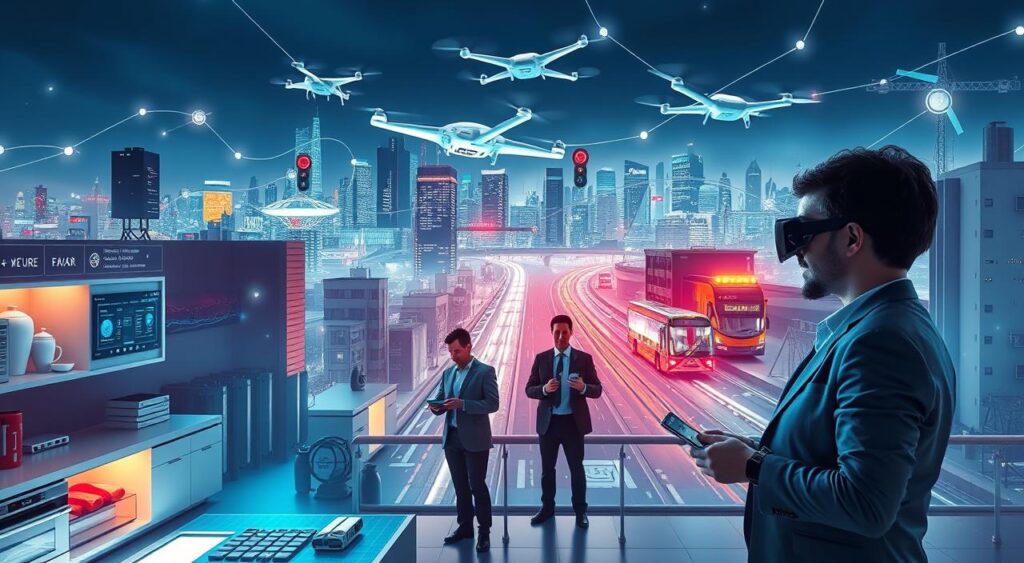
Digital innovation is changing how businesses work and talk to their customers. It uses digital tech to make new or better products, services, and ways of doing things.
This change isn’t just for companies; it affects everyone. Digital transformation helps the economy grow, makes things more efficient, and makes customers happier.
As the world gets more connected, knowing about digital innovation is very important. It helps us stay ahead.
Key Takeaways
- Digital innovation is key to business success in the modern era.
- It involves the use of digital technologies to drive transformation.
- Digital transformation has a broad impact on both businesses and society.
- Understanding digital innovation is crucial for future growth.
- It enhances customer experiences and improves efficiency.
Defining Digital Innovation in Today’s World
Digital innovation is key in today’s fast-changing world. It means using digital tech to make new or better business stuff. This includes processes, products, and services.
The Evolution of Digital Technologies
Digital tech has changed a lot in recent years. The internet came first, then artificial intelligence (AI) and Internet of Things (IoT). Each step has made our digital world more complex.
Key Components of Digital Innovation
The main parts of digital innovation are data analytics, cloud computing, and digital platforms. These help businesses to keep up and grow.
| Component | Description | Impact |
|---|---|---|
| Data Analytics | Using data to inform business decisions | Improved strategic planning |
| Cloud Computing | Storing and processing data online | Increased scalability and flexibility |
| Digital Platforms | Enabling digital business models | New revenue streams |
Knowing these parts and how they change helps businesses grow. They can use digital innovation to succeed.
The Current State of Technology and Innovation
In 2023, technology and innovation are changing fast. Digital transformation trends are changing how businesses work and grow.
Global Digital Transformation Trends in 2023
2023 has brought big changes in digital transformation. Some important trends are:
- More businesses are using cloud computing to grow and change fast.
- Artificial intelligence (AI) and machine learning (ML) are helping many industries work better.
- The Internet of Things (IoT) is growing, linking more devices and offering new data chances.
These trends help businesses work better and bring new ideas to many fields.
Recent Breakthroughs Changing the Innovation Landscape
Recently, we’ve seen big technology advancements that are changing how we innovate. Some big ones are:
- The start of 5G networks, making internet faster and more stable.
- Improvements in blockchain, making things safer and more open.
- New things in biotechnology, leading to better health treatments and tests.
These new things are not just making things better. They’re also opening up new chances for businesses and fields to grow.
How Digital Innovation is Reshaping Industries
Digital innovation is changing many sectors a lot. It’s making businesses work differently and offer more value. New tech, models, and ways of doing things are leading to big changes.
Healthcare Transformation Post-Pandemic
The COVID-19 pandemic made healthcare innovation grow fast. It’s all about telemedicine, watching patients from afar, and medicine made just for you. Now, doctors can see patients without being in the same room. This makes care easier to get and cheaper.
Financial Services Revolution Through Fintech
Fintech has changed the financial world a lot. It’s brought in mobile payments, digital wallets, and systems based on blockchain. These new things help more people get financial help, cut down costs, and make things safer.
Manufacturing and Supply Chain Resilience
Digital innovation has also changed how we make things. It’s brought in things like the Internet of Things (IoT), artificial intelligence (AI), and robots. These help make supply chain resilience better. Now, makers can quickly adjust to changes in what people want and what they can get.
Overall, digital innovation is making big changes in many areas. It’s helping businesses be more flexible, efficient, and strong in the market.
Digital Innovation in the Philippine Context
The digital world in the Philippines is changing fast. This is thanks to government plans and a growing number of startups. More people are using digital tools in different areas.
Current Digital Landscape and Adoption Rates
More people in the Philippines are going online. This has made people want more digital services. Now, we see more online shopping, digital payments, and learning.
Internet Penetration: Over 60% of people can now use the internet. This number is still going up.
Government Initiatives and Digital Philippines 2025
The government has started plans to boost digital innovation. The “Digital Philippines 2025” strategy is a big part of this. It wants to make the country more digital by improving internet, teaching people about tech, and helping startups grow.
“The Digital Philippines 2025 strategy is a comprehensive plan to harness the potential of digital technologies for economic growth and social development.” – Department of Information and Communications Technology
Recent Success Stories from Filipino Tech Startups
Filipino tech startups have done well lately. Companies like Grab and PayMaya are leading in fintech. Other startups are making a difference in online shopping, health, and education.
| Startup | Sector | Notable Achievement |
|---|---|---|
| Grab | Transportation/Fintech | Expanded services to multiple Southeast Asian countries |
| PayMaya | Fintech | Leading digital payments platform in the Philippines |
| Shoppee | E-commerce | One of the largest e-commerce platforms in Southeast Asia |
The future for digital innovation in the Philippines looks bright. With government help and a lively startup scene, the country is set to play a big role in the digital world.
The Economic Impact of Digital Innovation
Digital innovation is more than just new tech. It’s a big boost for the economy. It changes how we work and live, bringing new chances and problems.
Job Creation and Workforce Transformation
Digital innovation changes jobs a lot. Some jobs might go away, but new ones come up. These new jobs need skills for tech like data science and AI.
GDP Growth Projections and Economic Development
Digital innovation helps the economy grow. It’s expected to keep growing with tech like 5G and AI. This growth helps not just rich countries but also new ones.
| Indicator | Pre-Digital Innovation | Post-Digital Innovation |
|---|---|---|
| Job Market | Limited by traditional sectors | Expanded into tech-driven fields |
| GDP Growth | Slow, traditional growth | Accelerated by digital economy |
The economic impact of digital innovation is wide. It affects jobs and the economy’s growth. As tech keeps changing, we must keep up to succeed.
Key Drivers of Successful Digital Innovation
Several key elements are needed for digital innovation to succeed. These help adopt new tech and improve continuously. They also make a workplace that loves to innovate.
Leadership and Organizational Culture
Leadership is key for digital innovation. Leaders who support innovation and take risks do well. They create a culture that loves creativity and teamwork.
Companies that support innovation keep their employees happy. They also attract the best people who want to work on cool projects.
Technology Infrastructure Investment
A good technology infrastructure is vital for innovation. It means having strong IT systems and new tech like cloud and AI.
With the right tech, companies work better, serve customers better, and grow more.
Talent and Skills Development Programs
Talent development is crucial for digital innovation. As tech changes, companies need to teach their people new skills.
This means training in data, marketing, and coding. It also means learning always.
By focusing on these areas, companies in the Philippines and worldwide can do well in the digital world.
Challenges and Barriers to Digital Innovation
Many challenges stop digital innovation from being used more. Countries and industries are moving to a digital future. It’s key to know these obstacles to find ways to beat them.
Digital Divide and Access Issues in Developing Regions
The digital divide is a big problem, especially in poor areas. It’s when some people can’t use modern tech while others can. In the Philippines, rural places often don’t have fast internet.
Trying to fix this includes making internet and tech skills better. Governments and companies need to help make tech available to everyone.
Regulatory Hurdles and Policy Developments
Regulatory hurdles are also a big problem. Digital tech changes fast, but rules don’t always keep up. This makes it hard for companies to innovate.
New policies try to help digital innovation. For example, the Philippines has a plan to make rules better for digital businesses. This helps innovation and keeps people safe.
Cybersecurity Threats and Recent Incidents
Cybersecurity threats are a big challenge. As tech gets better, so do cyberattacks. Recent attacks show even top tech can be weak.
To fight these threats, companies and governments are spending a lot on security. They’re making security better, planning for attacks, and teaching people about safety.
Emerging Technologies Fueling Innovation
New technologies are changing how we innovate. They make old ways better and open up new paths for growth.
Artificial Intelligence and Machine Learning Applications
Artificial Intelligence (AI) and Machine Learning (ML) lead in tech innovation. AI helps with things like predicting the future and understanding language. It lets businesses make smart choices and better serve customers.
For example, AI chatbots help with customer support all day, every day. ML helps guess market trends and make things run smoother.
Blockchain Beyond Cryptocurrency
Blockchain is more than just for digital money. It’s great for tracking things, checking identities, and making smart deals. Companies use it to be more open, cut down on scams, and work better.
Internet of Things (IoT) Expansion
The Internet of Things (IoT) connects lots of devices. IoT changes fields like making things, health care, and moving people around. It lets us watch and control things in real time.
For example, IoT sensors in making things help guess when things might break. This cuts down on when things stop working.
5G Rollout and Advanced Connectivity
5G is coming and will change how we connect. 5G means faster, quicker connections. It will help more people use things like IoT, AI, and virtual reality.
Fields like phone services, fun stuff, and health care will get a big boost from 5G.
These new techs bring many good things:
- They make things work better and faster
- They make customers happier
- They open up new ways to make money
- They help make choices based on lots of data
As these techs keep getting better, they will help shape the future. They will also help the economy grow.
Digital Innovation Strategies for Philippine Businesses
In today’s fast-changing digital world, Philippine businesses must change their ways to keep up. They need to use digital innovation to grow and stay competitive.
Building a Digital-First Mindset
Having a digital-first mindset is key for success today. It means using digital tech in all parts of the business. This makes companies more agile, better at serving customers, and more innovative.
Implementing Innovation Labs and Incubators
Innovation labs and incubators are important for digital growth. They let businesses try out new tech and ideas. They also help companies work with startups and find new solutions to problems.
Cross-Industry Partnerships and Ecosystem Development
Working together is essential for digital innovation. Partnering with other industries opens up new markets and shares knowledge. This teamwork creates a strong ecosystem for growth and innovation.
By using these strategies, Philippine businesses can lead in digital innovation. This will help the economy grow and stay competitive.
Conclusion: The Future of Digital Innovation
The future of digital innovation is exciting. It will change how businesses and societies work. Technology keeps getting better, and digital innovation is key to this change.
In the Philippines, the government is working hard to make things digital. They have plans like Digital Philippines 2025. New tech like AI, blockchain, and IoT will help grow the economy.
Businesses need to think digitally first. They should invest in tech and train their people. They also need to solve problems like the digital gap and keep data safe.
The future looks bright for digital innovation. By using digital innovation, the Philippines can grow its economy. It can also make life better for its people and lead in tech.