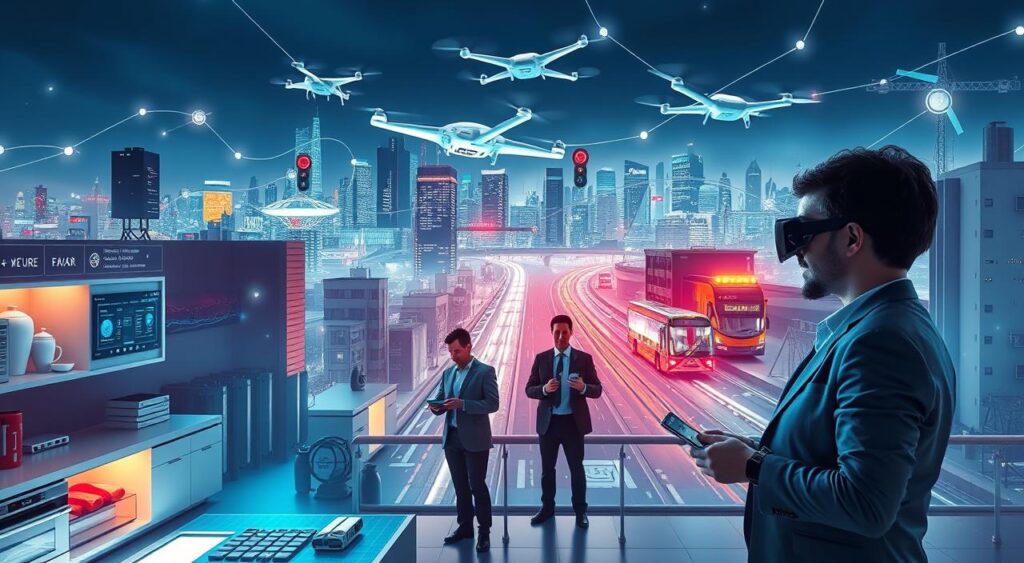
Automation is changing how we live and work. It makes things better by using Artificial Intelligence. This makes things more efficient and productive.
In today’s world, Automation is key. It helps businesses save money, be more accurate, and make customers happier.
Key Takeaways
- Automation uses Artificial Intelligence to make things better.
- It makes things more efficient and productive in many areas.
- Automation helps Technology grow, saving money and being more accurate.
- Automated systems make customers happier.
- Automation is changing how we live and work.
Understanding Automation in the Modern World
Automation has a big impact on our world today. It changes many parts of our lives, from work to home. It makes things faster and more efficient.
Definition and Basic Concepts
Automation means using technology to do tasks without people. It uses machines and computers to make things better. Automated systems can be simple or very complex.
The main idea is to make things faster and more precise. This way, we don’t need to do as much work.
The Evolution of Automated Systems
Automated systems have changed a lot over time. They started as simple machines and now are digital and smart. The start of Industry 4.0 was a big step.
It brought together new technologies like the Internet of Things (IoT) and cloud computing. This has made factories smarter and helped us grow and innovate more.
The Historical Development of Automation
Automation has grown over centuries. It started with simple machines and now includes AI and robotics. This change has changed how we work and industries.
From Industrial Revolution to Industry 4.0
The Industrial Revolution started automation with steam engines and machines. Early systems like textile machines made work faster. Then, Industry 4.0 brought in digital tech like IoT, AI, and robotics. Now, factories are smart and machines can decide on their own.
Key Milestones in Automation History
Automation’s history has many important moments. Some big ones are:
- Henry Ford’s assembly line changed how things are made.
- The first robot, Unimate, came in the 1960s.
- CNC machines made making things more precise and automated.
- AI and machine learning made automation even better.
These steps have made today’s automation systems very advanced. They have changed industries and brought new ideas.
Types of Automation Systems
Automation is not just one thing. It comes in fixed, programmable, flexible, and integrated systems. Each type meets different needs and works in various industries. They all have special benefits and abilities.
Fixed Automation
Fixed automation is for doing one thing well. It’s used in making products where the line makes the same thing over and over. The machines and controls follow a set path, perfect for making lots of the same item.
Programmable Automation
Programmable automation is more flexible. It can do many tasks by changing the software. This is great when you need to make different things often.
Flexible Automation
Flexible automation is even more adaptable. It lets you make many products without changing the machines much. It’s a mix of fixed and programmable automation, offering both speed and flexibility.
Integrated Automation
Integrated automation ties together different systems in a place. It makes sure all machines work well together. This boosts efficiency and productivity.
Knowing about these automation types is key. It helps businesses pick the right tech for their needs and goals.
Core Technologies Driving Modern Automation
Modern automation uses new technologies that change industries all over the world. These technologies make things more efficient and productive. They also change how businesses work.
Artificial Intelligence and Machine Learning
Artificial Intelligence (AI) and Machine Learning (ML) lead in modern automation. AI lets machines do things that need human smarts, like making choices and solving problems. ML helps systems get better with more data.
Robotics and Mechatronics
Robotics and Mechatronics are very important in modern automation. Robotics makes robots that can do things on their own or with a little help. Mechatronics mixes mechanical, electronic, and software engineering to make smart systems.
Internet of Things (IoT) and Cloud Computing
The Internet of Things (IoT) and Cloud Computing are also big in modern automation. IoT connects devices and sensors for real-time data. Cloud Computing stores and handles lots of data, making it easy to access and grow.
These key technologies are changing industries by making things better, cheaper, and of higher quality. As automation grows, we’ll see even more cool uses of these technologies.
How Automation Works: The Technical Process
Automation is more than just machines doing tasks. It’s about how these machines work together. They are controlled and coordinated to get specific results.
Input Systems and Sensors
Sensors are key. They pick up changes like temperature or motion. Then, they send this info to the system’s brain.
Processing and Decision Making
The brain of the system analyzes this data. It uses special rules to decide what to do next. Artificial intelligence and machine learning help make these decisions better.
Output Actions and Feedback Loops
After deciding, the system acts on its choice. This could be moving a part or sending a signal. Feedback loops help the system get better over time. They adjust based on what happens.
Technology and Innovation in Automation Today
New tech is changing how we work all over the world. Automation is getting smarter, helping businesses work better and save money.
Cutting-edge automation solutions tackle big problems in many fields. New tech like advanced robots, AI, and IoT is leading the way.
Cutting-Edge Automation Solutions
New automation makes systems more flexible and smart. For example, collaborative robots (cobots) work with people, making work safer and more efficient.
- Advanced machine learning algorithms for predictive maintenance
- Integration of IoT devices for real-time monitoring
- Development of more sophisticated robotic systems
Recent Breakthroughs and Developments
Big steps have been made in computer vision and natural language processing. These advances help make automation systems smarter and more able to understand complex tasks.
“The future of automation lies in the ability to integrate multiple technologies to create seamless and efficient processes.” –
Case Studies of Innovative Automation Implementation
Many companies have used new automation to great success. A top manufacturing firm used AI robots, boosting productivity and cutting costs.
These stories show how automation can change industries and help businesses grow.
Automation Across Different Industries
Automation is changing how businesses work all over the world. It makes things more efficient, cheaper, and better quality in many areas.
Different industries are using automation in their own ways. Let’s see how it’s changing key sectors.
Manufacturing and Production
In making things, automation makes processes smoother. It also makes products better and saves money on labor. Manufacturing automation uses robots and machines to do tasks that people used to do.
Healthcare and Medicine
Healthcare automation helps patients by doing tasks that take up time. It makes diagnoses more accurate and treatment plans more personal. Automation also makes healthcare faster and more efficient.
Finance and Banking
The finance world uses finance automation for quick and safe money moves. It also spots fraud and helps with customer service through chatbots. This makes financial dealings faster and safer.
Agriculture and Food Production
Agriculture automation changes farming with new methods. It includes precise farming, automated watering, and robot picking. This leads to more food and less waste.
Retail and Customer Service
In retail, retail automation makes shopping better. It offers personal advice, manages stock, and speeds up checkout. This makes customers happier and stores run better.
Automation keeps getting better, and its effects on these industries will only grow. This will lead to more new ideas and ways for businesses to work.
The Benefits and Advantages of Automation
Automation makes things better in many ways. It makes work more efficient and safer. It changes how businesses work.
Companies can make their work flow better. They can save money and work more efficiently.
Increased Efficiency and Productivity
Automation makes work faster and more accurate. It lets businesses make more with less effort. This means they can work faster and better than before.
This gives them an edge over others in the market.
Cost Reduction and Resource Optimization
Automation helps save money and use resources better. It makes tasks that are boring and repetitive easier. This saves on labor costs.
It also helps use less waste and energy. This saves money and is good for the planet.
Enhanced Safety and Quality Control
Automation makes work safer and better. It does tasks that are dangerous, so people don’t get hurt. This makes the workplace safer.
It also makes sure things are made the same way every time. This means products are of higher quality.
| Benefits of Automation | Description | Impact |
|---|---|---|
| Increased Efficiency | Automated systems perform tasks faster and more accurately | Improved productivity and competitiveness |
| Cost Reduction | Minimized labor costs and optimized resource allocation | Significant cost savings and improved profitability |
| Enhanced Safety | Automated systems perform hazardous tasks, reducing workplace risks | Safer working environment and reduced liability |
Challenges and Limitations of Automation Systems
When companies use automation, they face many challenges. These include technical issues and thinking about how much money they will make. Automation systems are good but have limits that can affect how well they work.
Technical Constraints and Integration Issues
One big problem with automation is technical constraints and integration issues. Old systems might not work with new automation. This means big changes or new systems are needed. Making these systems work together smoothly is hard and takes a lot of time.
Implementation Costs and ROI Considerations
The implementation costs of automation can be very high. This includes the price of hardware, software, and training. Companies must think about the return on investment (ROI) to see if it’s worth it. They need to look at both the short and long-term money effects.
Security and Privacy Concerns
Automation systems also have security and privacy concerns. With more connections, the chance of cyberattacks and data breaches goes up. Companies must have strong security to keep information safe and their systems working right.
The Impact of Automation on the Workforce
Automation is changing the job world a lot. It’s not just about new tech. It also affects people.
Job Displacement vs. Job Creation
Many talk about jobs lost to automation. But, it also brings new jobs. For example, AI has made new jobs in AI tech.
Key statistics: Research shows that automation might take 75 million jobs by 2022. But, it could also make 133 million new ones.
New Skills and Roles in an Automated World
The automated world needs new skills. People need to know how to work with machines. They must understand complex systems and learn new tech.
Education and Training for the Automated Future
We need to keep learning for the future. Schools and companies must team up. They should teach about new tech and soft skills.
By learning and retraining, we can do well in an automated world.
Automation in the Philippines: Current State and Future Prospects
The Philippines is quickly moving towards automation in many fields. This change aims to make things more efficient and competitive. It helps the country do better in both local and global markets.
Key Automation Initiatives in Filipino Industries
The Philippines is seeing big changes in automation across different areas. Two main fields where automation is making a big difference are:
BPO and Service Sector Automation
The Business Process Outsourcing (BPO) industry is a big part of the Philippine economy. It’s using automation to make customer service and operations better. This includes using chatbots, virtual assistants, and making back-office tasks automatic.
Manufacturing Automation in the Philippines
The manufacturing sector is also getting more automated. Companies are using robots and machine learning to make things better. This helps in making products of higher quality.
Government Policies and Support for Automation
The Philippine government is helping automation grow with its policies and programs. It offers incentives for businesses to use new technology. It also works on making the workforce more skilled.
“The government’s support for automation is crucial in driving the country’s economic growth and competitiveness.”
Filipino Startups and Innovation in Automation Technology
Filipino startups are key in bringing new ideas in automation. They create advanced solutions for both local and global markets.
| Industry | Automation Technology | Impact |
|---|---|---|
| BPO | Chatbots, Virtual Assistants | Enhanced Customer Service |
| Manufacturing | Robotics, Machine Learning | Improved Production Processes |
| Service Sector | Automated Back-office Processes | Increased Operational Efficiency |
The future for automation in the Philippines looks bright. With more investment in tech and innovation, the economy is expected to grow and develop further.
Conclusion: The Future of Automation
The future of automation is going to change many things. It will make industries better and change how we live and work. Technology and innovation will keep getting better, making automated systems smarter and more efficient.
Artificial intelligence, robotics, and the Internet of Things (IoT) will make a big difference. They will make things more productive, safe, and of better quality. As automation grows, new jobs and skills will appear, helping us adapt to this new world.
In the Philippines, automation will help the economy grow and make businesses more competitive. It will also create new chances for people. By investing in automation, the Philippines can become a leader in the region.
We need to think about the challenges of automation too. Things like technical problems, high costs, and security worries are important. By understanding these, we can make sure automation helps everyone and makes the world a better place.