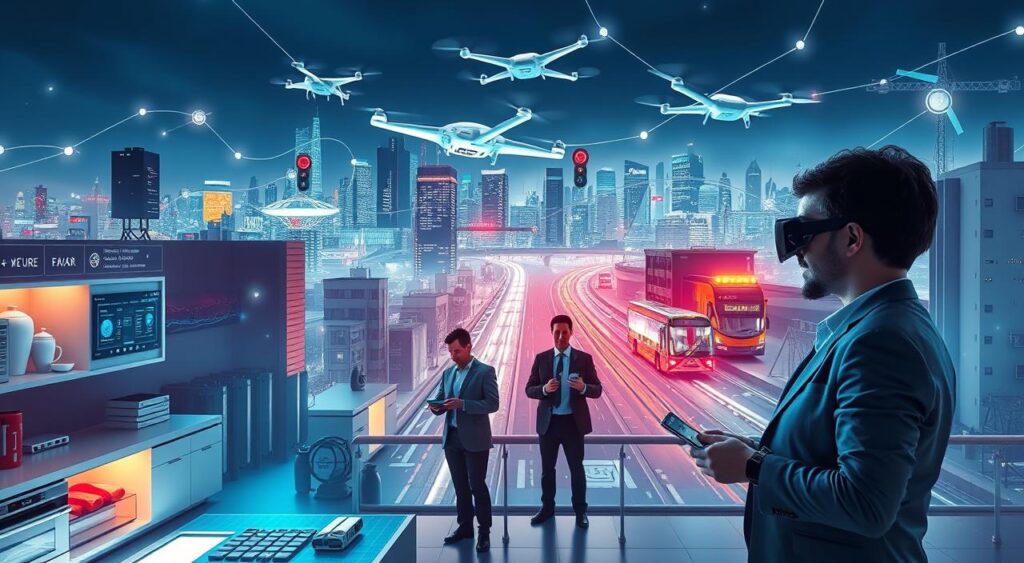
In today’s fast world, adapting to new technology is key. The quick changes in digital transformation are changing our lives and work.
As we move through this changing world, it’s important to know how to adapt. This article will give you tips and insights. You’ll learn how to smoothly move to new technologies and stay current.
Key Takeaways
- Understand the importance of adapting to new technologies
- Learn how to stay ahead of the curve in digital transformation
- Discover practical tips for making a seamless transition to new technologies
- Find out how to remain relevant in the modern world
- Gain insights into the benefits of embracing new technologies
The Accelerating Pace of Digital Transformation
The world is changing fast. This change affects businesses and societies. New technologies are changing how we live and work.
Technological innovation is key. Breakthroughs in AI, blockchain, and IoT are leading the way. These techs make things more efficient and open up new ways to grow.
Recent Technological Breakthroughs Reshaping Industries
Recently, big tech advances have changed many industries. For example, artificial intelligence automates hard tasks. Blockchain technology makes things safer and clearer. The IoT connects devices, making data collection and analysis easier.
These techs are changing healthcare, finance, and manufacturing. AI helps in healthcare, and blockchain makes finance smoother.
The Growing Digital Divide: Who’s Being Left Behind
But, there’s a problem. The digital divide is growing. It’s the gap between those with and without digital access. In the Philippines, internet and digital skills vary greatly.
We need to help everyone get online and learn digital skills. This way, everyone can join the digital economy.
Technology and Innovation: The New Normal After COVID-19
During the COVID-19 pandemic, technology was key. It helped keep things going and brought new ideas. The pandemic made more people use digital tools in work and life.
Pandemic-Accelerated Digital Adoption Statistics
The pandemic made more people use digital tools. This was true for many areas. There was a big jump in online shopping, working from home, and using digital money.
| Industry | Pre-Pandemic Digital Adoption Rate | Post-Pandemic Digital Adoption Rate |
|---|---|---|
| E-commerce | 30% | 60% |
| Remote Work Tools | 20% | 80% |
| Digital Payment Systems | 40% | 75% |
Industries Most Affected by Technological Disruption
The pandemic changed many industries. Technology was a big part of these changes. Areas like education, healthcare, and finance saw big shifts.
Some of the key industries affected include:
- Education: Shift to online learning platforms
- Healthcare: Adoption of telemedicine services
- Finance: Increased use of digital banking and payment systems
Now, technology and innovation are the norm. They push businesses and people to keep up with new trends.
The Philippines’ Digital Landscape in 2023
In 2023, the Philippines is changing fast in its digital world. More people of all ages and places are using technology. This change is thanks to more internet, lots of mobile devices, and help from the government to learn about digital stuff.
Current Technology Adoption Rates Across Demographics
More people in the Philippines are using technology now. They are using the internet a lot, especially for social media and online shopping. Most people use smartphones to get online.
Who uses technology varies by age and where they live. Young people are quick to try new tech, while older folks are catching up. Cities have more tech users than rural areas, but the gap is getting smaller.
Government Initiatives Supporting Digital Literacy
The Philippine government is working hard to help everyone learn about digital stuff. They have a program called the Department of Information and Communications Technology’s (DICT) Digital Literacy Program. It teaches people how to use the internet and digital tools.
“The DICT’s efforts to promote digital literacy are crucial in ensuring that all Filipinos can benefit from the opportunities presented by the digital economy,” said a government official.
They are also building digital services in places that don’t have them yet. And they are making it easier to use government services online. These steps will help make the Philippines’ digital world better for everyone.
Psychological Barriers to Technology Adaptation
As digital worlds grow, knowing what stops people from using new tech is key. It’s not just about having devices or internet. It’s also about how ready someone feels to use new tech.
Research on Technology Anxiety Among Filipinos
Technology anxiety is fear of using new tech. It stops many from trying new things. In the Philippines, some groups like older adults or those with less education feel this fear more.
For example, older Filipinos might feel scared because they don’t know how to use digital stuff. They worry it’s too hard.
Cognitive Biases Affecting Technology Acceptance
How we see and use new tech is shaped by our thoughts. Biases like preferring what we know can stop us from trying new things. Also, believing only what we think is true can make us not want to try new tech.
Knowing these biases helps us make better plans. We can help people feel more open to new tech. This way, more Filipinos can join the digital world.
Proven Strategies for Seamless Technology Adaptation
Adapting to new technology needs the right mindset and strategies. As we move through the digital world, we must find ways to easily learn new tech.
The Microlearning Approach to Digital Skills
Microlearning is a popular way to learn digital skills. It breaks down big topics into small parts. This makes learning easier and more fun.
Five-Minute Learning Blocks
Microlearning uses short learning sessions. Just five minutes a day can help a lot. Apps like Duolingo show that short practice can add up over time.
Spaced Repetition Techniques
Spaced repetition is key in microlearning. It means reviewing what you learned at longer intervals. Research shows it boosts memory and speeds up learning.
Practical Application Methods
Using what you learn is very important. It’s not just about knowing new tech. It’s about using it in real life.
- Start with small projects that use new tech.
- Join online groups or forums about the tech.
- Work with others who know or are learning the tech.
By mixing theory with practice, you can learn faster. This way, you can get good at new tech quickly.
Success Stories: Filipino Professionals Mastering New Technologies
Many Filipino professionals have quickly learned new technologies. They have seen great results. This section shares stories of people who used new tools to grow and innovate.
Case Study: Traditional Businesses Going Digital
A family-owned business in the Philippines went online. They used digital marketing and an online store. This helped them reach more customers.
Sales and brand visibility greatly increased. The business grew and stayed strong in a tough market.
Interviews with Technology Adaptation Experts
We talked to experts who help Filipino professionals with technology. Jane Doe, a top digital transformation consultant, said, “Understanding your business needs is key. Then, find the right digital tools.” Experts stress the need to keep learning and be quick to adapt.
These stories show how Filipino professionals can do well in a fast-changing world. By using new tech and getting advice, they can grow and stay ahead.
Resources and Tools for Technology Upskilling
In today’s fast-changing digital world, finding the right tools is key. It’s important to know where to learn and grow.
Free and Low-Cost Learning Platforms
The internet makes learning easy and affordable. There are many free and low-cost places to learn.
Online Courses Tailored for Beginners
Coursera, edX, and Udemy have courses for newbies. They teach everything from basic computer skills to advanced coding.
Mobile Apps for Skill Development
Apps like Duolingo for languages, Codecademy for coding, and Khan Academy for many subjects are great. They’re perfect for those who are always on the go.
Community Support Networks in the Philippines
Local tech groups and meetups are also important. They offer a chance to learn by doing and meet others.
Groups like GDG (Google Developer Groups) Philippines and Techstars help improve tech skills. They encourage teamwork and new ideas.
| Resource | Description | Cost |
|---|---|---|
| Coursera | Online courses on various tech subjects | Free/Audit; $49-$79 Certificate |
| Codecademy | Interactive coding lessons | Free; $19.99 Pro |
| GDG Philippines | Community support and tech events | Free |
Using these tools, people in the Philippines can get better at technology. This helps them keep up in a fast-changing job market.
Future-Proofing Your Skills in an AI-Driven World
In a world driven by artificial intelligence, we must adapt our skills. AI keeps getting better, so it’s key to learn new things. We need to understand new tech and get skills that work well with AI.
Emerging Technologies to Watch in 2023-2024
The next few years will see big changes in AI and tech. Some important new tech includes:
- Advanced Natural Language Processing (NLP)
- Edge AI
- Explainable AI (XAI)
- AI-driven Cybersecurity
These techs will change many fields, like healthcare and finance. It’s important for workers to know about these changes to keep their jobs.
Developing Complementary Human Skills
AI is great at some things, but humans are better at others. Skills that are uniquely human will still be important. These include:
| Skill | Description |
|---|---|
| Creativity | The ability to come up with new ideas and solutions |
| Emotional Intelligence | Understanding and managing feelings in oneself and others |
| Critical Thinking | Being able to analyze information and make smart choices |
As
“The future of work will be humans and AI working together. Humans will focus on tasks that need creativity, empathy, and solving complex problems.”
By working on these human skills, we can stay important in a world with more AI.
Conclusion
The Philippines is moving fast in the digital world. It’s not just a choice to use technology anymore. It’s something we must do.
New ideas are changing how we work and live. This is making new chances for everyone.
To keep up, we all need to keep learning. We can use short lessons and help from others to get better.
Being ready for the future means using new tech and learning all the time. We should always be open to new things.
Let’s make sure we’re ready for what’s next. We can do this by learning and using new tech together.